

Hello! I'm
Your hype girl, sounding board, designer, and friend! I design branding and websites for business owners who want to pave the way in their industry.
Sydney.
brand and web design services
I design brands that release the confidence in you.
made for mothers x dfw
I lead the local DFW chapter for a CEO Mom Community, MFM
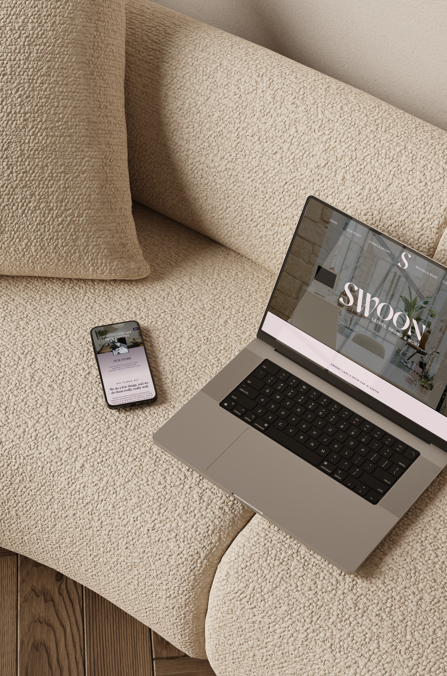
You have a website. It exists on the internet. People can find it if they know your name or if they search for exactly what you do. Good job, you exist online.
But here’s the real question: is it actually working for you? Does Google know you exist? Do your potential clients understand what you do?
Because there’s a massive difference between having a website and having a website that works. And I see business owners confused about this difference all the time. They think their website isn’t working because it’s not pretty enough, or the design is dated, or they need to refresh the colors. So they hire a designer to make it look better.
Or they say they have a website and it’s fine! It’s there and “I’m official”.
Then they launch the pretty website and nothing changes. Still no conversions. Still sending warm leads to their site and never hearing from them again.
That’s because the problem was never the design.
What “Having a Website” Actually Means
You built a website. Or you threw together a Squarespace template. Or you hired someone to build you a site. It’s there. It exists. It has pages. It tells people what you do.
That’s having a website.
It’s passive. You put it out there and hope people find it. You send people to it and hope they figure out what to do next. You built it once and now it just sits there.
Most business owners have a website. But most websites don’t actually work. They look fine. They’re fine. They’re just fine.
And fine doesn’t convert anyone.
Sometimes they even have a negative effect and send people away from your business. “Sketchy website? Must be a sketchy establishment too.” On to the next search!
What “Having a Website That Works” Actually Means
A website that works is different. It’s intentional. It’s strategic. Every page exists for a reason. Every word is there because it serves a purpose. The design supports the message. The copy moves people toward taking action.
A website that works does the selling for you.
You send someone to your homepage and they don’t have to wonder what you do. They don’t have to figure out who you serve. They don’t have to guess at your process or your pricing or whether you’re someone they should work with. You’ve answered all of that for them already.
They land on your site and they think “Oh, this is for me.” And then they reach out.
That’s a website that works.
Why Beautiful Websites Don’t Always Convert
I gotta be honest with you, mostly because I feel like I’m constantly saying this in my DMs and I need somewhere to point people to! You can have the most beautiful website in the world and it still won’t convert anyone.
Design is important. I’m a designer, so I’m obviously saying that. But design alone doesn’t make a website work. Pretty doesn’t convert people. Pretty just makes them stay and look around a little longer before they leave.
A beautiful website with bad copy is like a model who has nothing interesting to say. Nice to look at, but you’re not going to hire them to run your business.
I’ve seen websites that look like they cost $50,000 and convert nothing. Because the copy doesn’t match what people are actually looking for. Or the messaging doesn’t speak to the right person. Or the design looks so slick and corporate that your ideal client feels like you’re not for them. Or the whole thing is so confusing that people give up trying to figure out what you actually do.
Design is part of the equation. But it’s not the whole thing. The design should carry the copy. The design should emphasize the copy. The design should make you vibe with the copy.
Why “Fine” Doesn’t Cut It Either
The other problem I see is the “fine” website. It’s not ugly. It’s not beautiful. It’s just… fine. It’s a template that a thousand other people are using. It has okay copy. Nothing jumps out as wrong, but nothing jumps out as right either.
Your ideal client lands on it and thinks “This looks like every other [your industry] website I’ve seen.” And then they leave to check out your competitor’s site.
Fine is invisible. Fine doesn’t make a case for why someone should work with you. Fine doesn’t stand out. Fine doesn’t convert.
You have to be willing to be more than fine. You have to be willing to actually take a stand. To say something. To show something. To prove something.
That’s when a website starts working.
The Three Things Every Website That Actually Works Needs
Okay, so what makes a website actually work? What’s the difference between a website that sits there looking nice and a website that actually lands clients?
The first thing is strategy. Before you design anything, before you write anything, you need to know who you’re actually trying to reach and what you’re trying to tell them. Strategy is understanding your ideal client. Not the version you think you should serve, but the actual person who needs what you do. It’s understanding their pain point. It’s knowing how you solve that problem. It’s positioning yourself against everyone else doing what you do.
Strategy is answering questions like: Who is this website for? What problem are they trying to solve? Why should they trust you? What are they worried about? What do they need to hear to feel confident hiring you? Without strategy, your website is just words and pictures. With strategy, your website becomes a tool. Most websites don’t have strategy. Most websites are just “Here’s what we do, here’s how much it costs, call us if you want to hire us.” That’s not strategy. That’s lazy.
The second thing is copy that actually speaks to people.
Your website copy has one job: move someone from “I’m not sure” to “I’m ready to reach out.” Good website copy doesn’t sound like it was written by a corporate robot. It sounds like you. It speaks to your specific person. It answers the questions that are actually keeping them from hiring you. It addresses their fears. It shows them you understand them.
Bad website copy is generic. “We specialize in helping businesses grow.” “We have over 10 years of experience.” “We’re passionate about what we do.” Those things might be true, but they don’t prove anything. And they don’t make anyone feel like you actually understand them. Good copy sounds like this: “Most people hire me because they’re already doing great work but nobody knows about it. They’re tired of explaining themselves. They’re tired of fighting for attention. They want a brand and website that finally prove how good they actually are.” See the difference? One speaks to a specific person and their specific problem. One is generic.
The third thing is design that supports the message.
Once you have strategy and copy, design brings it all together. Design makes the message clear. Design draws attention to what matters. Design makes your website feel like your brand. Design should never compete with your message. Design should support it. The colors you choose, the typography, the layout, the images, the white space, all of it should work together to prove the point you’re making in your copy.
If your copy is saying “I’m an elevated, luxury brand” but your design looks like a template, those two things don’t match. If your copy is casual and fun but your design is super corporate, again, mismatch. Design isn’t just pretty. Design is communication.
How do I know if my website is working or not?
Okay, so how do you know if you have one of those websites that works or if you’re sitting with a fine website that’s not converting anyone?
Are people reaching out? Not “Did my website get traffic?” but “Are people actually contacting me from my website?” If you’re sending warm leads to your website and never hearing back, your website isn’t working. Your website has a problem. What are people saying when they do reach out? Are they ready to book or do they still have a bunch of questions? If they’re reaching out with “So what exactly do you do?” then your website didn’t answer that question. If they’re reaching out saying “I’m ready to book,” your website is working.
Are people staying or bouncing? This is a technical metric (you can check in Google Analytics), but basically: do people land on your site and immediately leave, or do they stay and look around? If they’re bouncing immediately, your headline or your first impression isn’t landing. What’s your conversion rate? Not email signups or newsletter subscribers, but actual potential clients contacting you for your services. What percentage of people who land on your site are reaching out? If it’s less than 2-3%, something’s not working.
Do you feel confident sending people to your website? This is the gut check. When someone asks what you do, do you want to send them to your website? Or do you want to explain it yourself because you know your website doesn’t do it justice? If it’s the latter, your website isn’t working.
What Actually Needs to Change
Here’s the thing I tell people all the time: if your website isn’t working, it’s not usually because it looks bad.
It’s usually one of three things. Your positioning is unclear. People don’t understand who you’re for or what you do. The fix isn’t a new design. The fix is strategy. You need to get clear on your positioning, your messaging, and who you’re actually serving.
Or your copy doesn’t match your conversations. What you’re saying on your website is different than what you’re saying in real conversations with people. The fix is rewriting your copy to sound like you and match the conversations you’re actually having.
Or your design doesn’t match your brand. You have a brand and strategy, but your website looks like a template. The fix is custom design that actually represents your brand.
Most of the time it’s a combination of all three. You need strategy. You need copy that’s actually good. And you need design that supports both. That’s a website that works.
The Investment Matters
Here’s what I want to say plainly: a website that actually works takes more investment than a website that just exists.
You can’t build a converting website for $500. You can’t get it from a template. You can’t DIY your way there with Canva and ChatGPT. A website that works requires someone who understands strategy. Someone who can write copy that actually converts. Someone who can design in a way that supports the message.
That costs more money. It takes more time. It requires more thinking. But it also actually works. It does the selling for you. It brings in clients. It changes your business.
So the real question isn’t “Can I afford to invest in a website that works?” The real question is “Can I afford not to?” Because right now you’re probably spending a ton of time explaining yourself to people. Answering the same questions over and over. Chasing leads that go cold. Wondering why your website doesn’t convert.
What if you invested in making it actually work instead?
PS can I go off on a quick tangent about ChatGPT copy? Chat can write you a website, but what it can’t do is tell stories throughout it. Speak off empathy and connect directly to your ideal audience’s heart strings and yank on them. Give real world examples. Put the client in the shoes of already working with you. It can for sure tell people what you do and how if you give it a good enough prompt, but beyond that? You’re back at square one with a website that simply is just there.
Ready to Build a Website That Actually Works?
If your website is currently in the “fine but not converting” category, we can fix that. Whether you need a full strategy rebuild, a copy refresh, or a complete rebrand and redesign, I can help you move from a website that exists to a website that actually works.
Start with a Make It Make Sense session to get clear on what you actually need, or book a Hot Seat day if you know exactly what needs to change.

Hi, I'm Sydney. The problem solving brand and website designer!

As the next person who is hopefully? about to *quite literally* be all up in your business, allow me to introduce myself!
As an ex-teacher, mini farmer, business owner x3, friend, wife, always with an open coffee mug, could talk to a wall for hours, and mom of 3 under 5, let me be the first honest person to say “I get the chaos” – and thankfully, I know exactly how to get you out of it.
consider your problems, solved
Your business is too good to keep explaining yourself. At this point, you need a brand and website that finally proves how capable you actually are so your ideal clients feel like they already know you before they ever reach out.
you've read the posts... now you know how to stop sending your webiste with a disclaimer.
SUBSCRIBE • SUBSCRIBE • SUBSCRIBE • SUBSCRIBE • SUBSCRIBE • SUBSCRIBE • SUBSCRIBE • SUBSCRIBE • SUBSCRIBE • SUBSCRIBE • SUBSCRIBE • SUBSCRIBE • SUBSCRIBE • SUBSCRIBE • SUBSCRIBE • SUBSCRIBE • SUBSCRIBE • SUBSCRIBE • SUBSCRIBE • SUBSCRIBE • SUBSCRIBE • SUBSCRIBE • SUBSCRIBE •
Get one marketing tip to your inbox every Monday morning,
plus learn to recognize how your brand fits into your real life.

connect
navigate
my newsletter
work with me
coffee chats
home
about
services
made for mothers
little black book
the blog
refer and earn
my portfolio
[to the top]
© rouse design llc | site design & copywriting | photography
Your brand and website shouldn’t just elevate your business — they should elevate your everyday life.
